
Saudi Arabia’s critical East-West oil pipeline could be back in service within days, according to U.S. Energy Secretary Chris Wright, potentially providing an important boost to global oil supply at a time when disruptions across the Middle East have tightened energy markets.
Speaking on the sidelines of a G20 energy meeting in Houston, Wright said the timeline for restoring the pipeline was expected to be measured in days rather than weeks. He cautioned, however, that a detailed assessment of the damage was still underway.
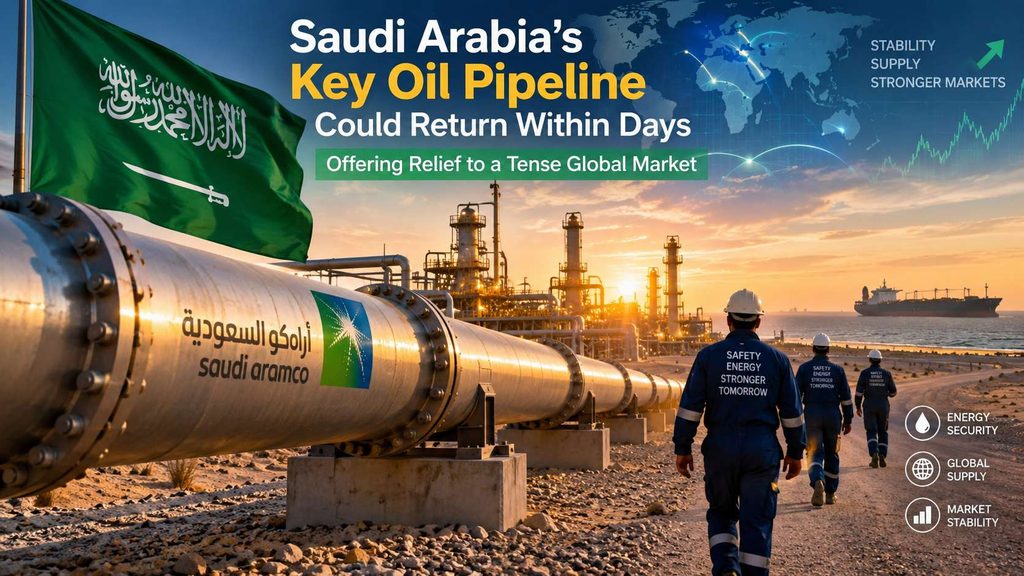
The development comes after attacks by Iran-aligned groups forced Saudi Arabia to temporarily shut down the strategically important pipeline. The interruption has added another layer of uncertainty to an already strained global oil market, where shipping routes through the region have faced significant disruption.
Why the East-West Pipeline Matters
Saudi Arabia’s East-West Pipeline is more than just another piece of energy infrastructure. Stretching roughly 1,200 kilometers across the kingdom, it provides a way to transport crude toward the Red Sea and reduce dependence on routes passing through the Strait of Hormuz.
Before the latest disruption, the pipeline was capable of carrying around 4 million to 5 million barrels of oil per day, according to Reuters. That represents approximately 4% to 5% of global oil supply, making any prolonged shutdown significant for international energy markets.
In simple terms, the pipeline functions as an alternative road for Saudi crude when the main maritime route becomes difficult or unsafe.
Repairs Could Change the Supply Outlook
The possibility of a rapid restart has attracted close attention because earlier estimates had suggested that repairs might take considerably longer. Reuters reported that some assessments had put the potential repair period at five to six weeks, while other indications pointed to the possibility of partial operations returning sooner.
If the pipeline resumes quickly, Saudi Arabia would have another avenue for moving crude toward export facilities on the Red Sea. That could reduce some of the immediate pressure created by disruptions elsewhere in the region.
However, a return to operation would not automatically resolve the broader supply problem.
Oil Markets Remain Under Pressure
The pipeline outage has occurred against a much larger backdrop of instability in Middle Eastern energy flows.
Reuters reported that oil prices rose sharply on September 15 as traders reacted to disruptions involving Saudi exports and other regional supply risks. Some physical crude cargoes in Europe were priced above $130 a barrel as buyers competed for alternative supplies.
The market therefore remains highly sensitive to developments affecting production, pipelines, ports and shipping lanes.
Even if the East-West Pipeline comes back online within days, traders will continue watching whether other transportation routes remain available and whether additional attacks threaten energy infrastructure.
A Critical Alternative to the Strait of Hormuz
The pipeline has become particularly important because the Strait of Hormuz has been heavily disrupted during the ongoing regional conflict.
Saudi Arabia has been trying to move more oil through alternative routes rather than relying entirely on the maritime chokepoint. The East-West Pipeline is central to that strategy because it can move crude toward the Red Sea without requiring every shipment to pass through Hormuz.
That makes its restoration important not only for Saudi Arabia but also for refiners, traders and fuel consumers around the world.
Saudi Arabia Faces Multiple Export Challenges
The pipeline shutdown is only one of the problems confronting Saudi oil exports.
Reuters has reported disruptions at Yanbu, the Red Sea export hub connected to the pipeline, while Saudi Arabia has also been exploring alternative methods of moving crude, including ship-to-ship transfers near Oman.
This means that restoring the pipeline is an important step, but the wider export network must also remain functional for crude to reach international buyers.
What the Restart Could Mean for Global Oil Supply
A successful restart could give the market some breathing room by restoring an important transportation route for Saudi crude.
The effect on prices, however, will depend on several factors. Traders will be watching the speed of the repair, the pipeline’s operating capacity after the restart, conditions around Saudi export terminals and the security of other regional shipping routes.
The market is therefore unlikely to focus solely on whether the pipeline starts operating again. The bigger question will be whether energy infrastructure across the region can continue operating without further interruptions.
The Next Few Days Will Be Closely Watched
For now, Wright’s comments provide a potentially encouraging timeline, but they should not be interpreted as confirmation that the pipeline has already returned to normal operations.
Saudi Arabia is still assessing and repairing the affected infrastructure, while regional security conditions remain uncertain.
If the pipeline does return within days, it could represent an important improvement for a global oil market that has been dealing with multiple supply and transportation disruptions.
But with oil flows across the Middle East still under pressure, the restoration of one major pipeline may be only one part of a much larger effort to stabilize global energy supplies.